

덕트형 에어컨 장치에 맞게 송풍기의 크기를 결정한다고 가정해 보겠습니다. The project owner asks for variable airflow, the energy manager asks for low running cost, and the maintenance team asks for a component that will not need attention every month. One unit answers all three: an EC centrifugal blower. Its integrated controller adjusts speed without an external frequency inverter, and its brushless motor holds high efficiency across a wide operating range. This guide explains how EC centrifugal blowers work, where they save energy, and how to specify one with confidence.
EC 원심 송풍기란 무엇입니까?
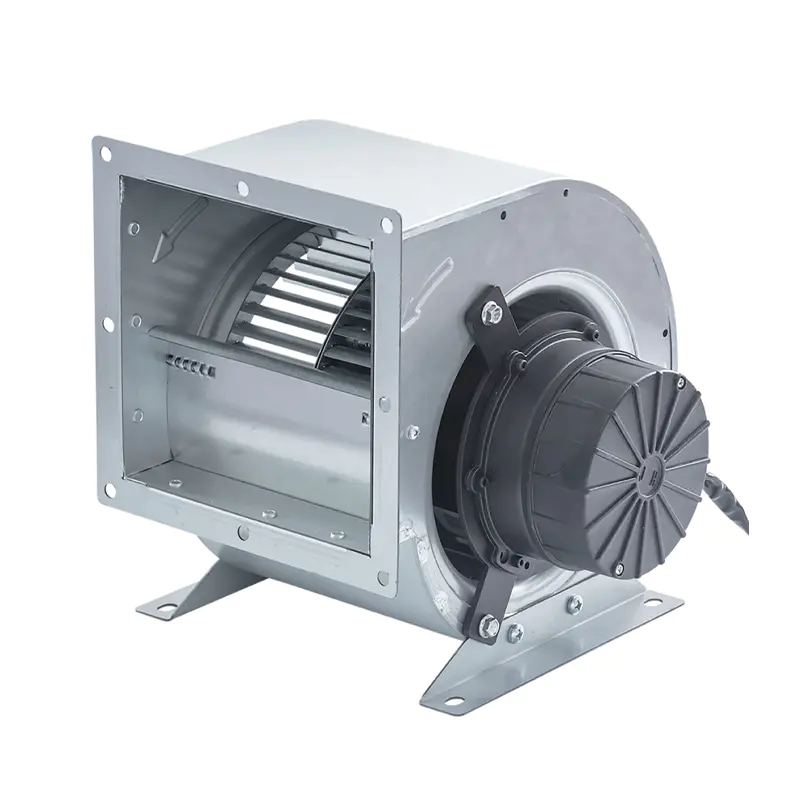
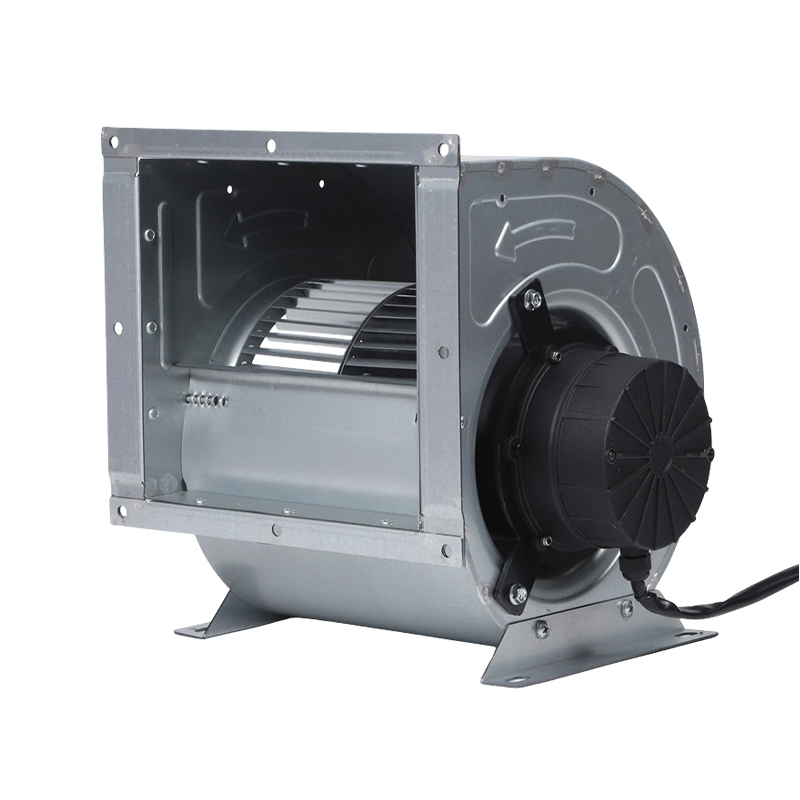
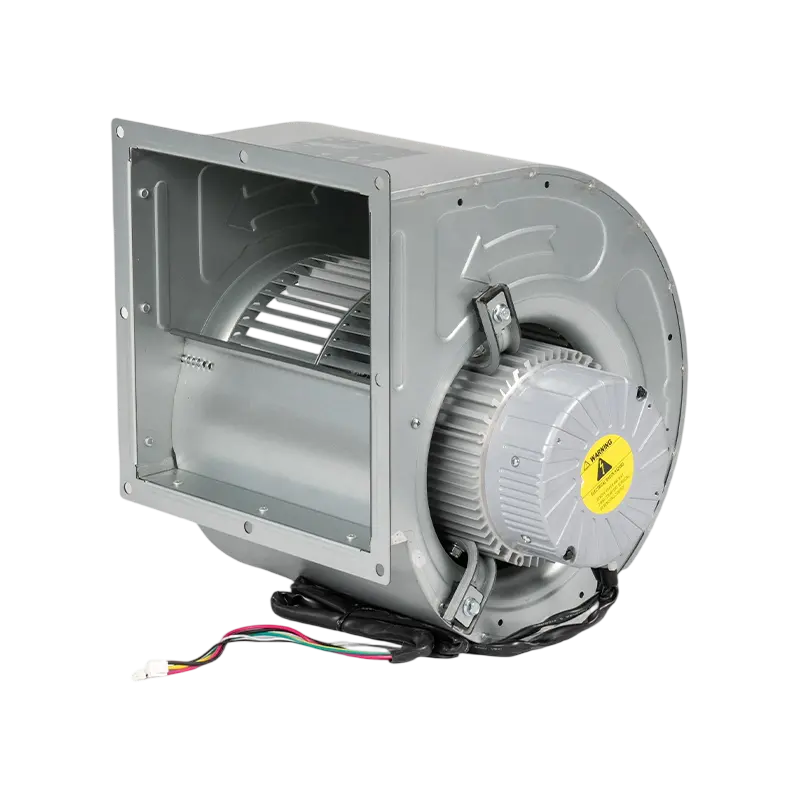
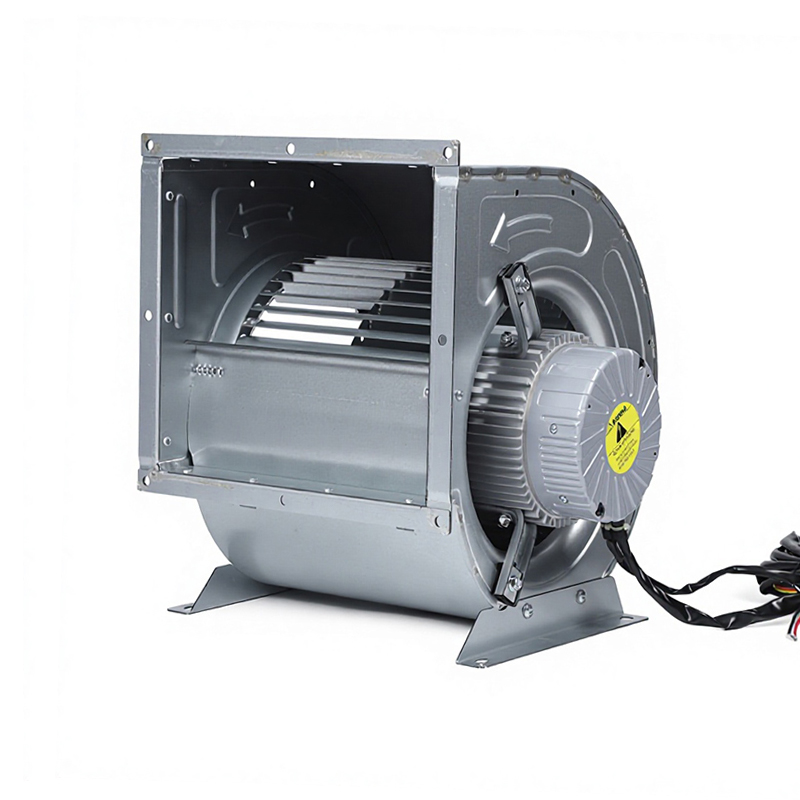
EC 원심 송풍기는 전자 정류(EC) 모터로 구동되는 원심 팬입니다. "EC" means the motor is a brushless DC machine whose stator windings are switched electronically rather than through carbon brushes. Because the commutation electronics live inside the motor housing, the complete blower — impeller, motor, and controller — arrives as a single, compact unit.
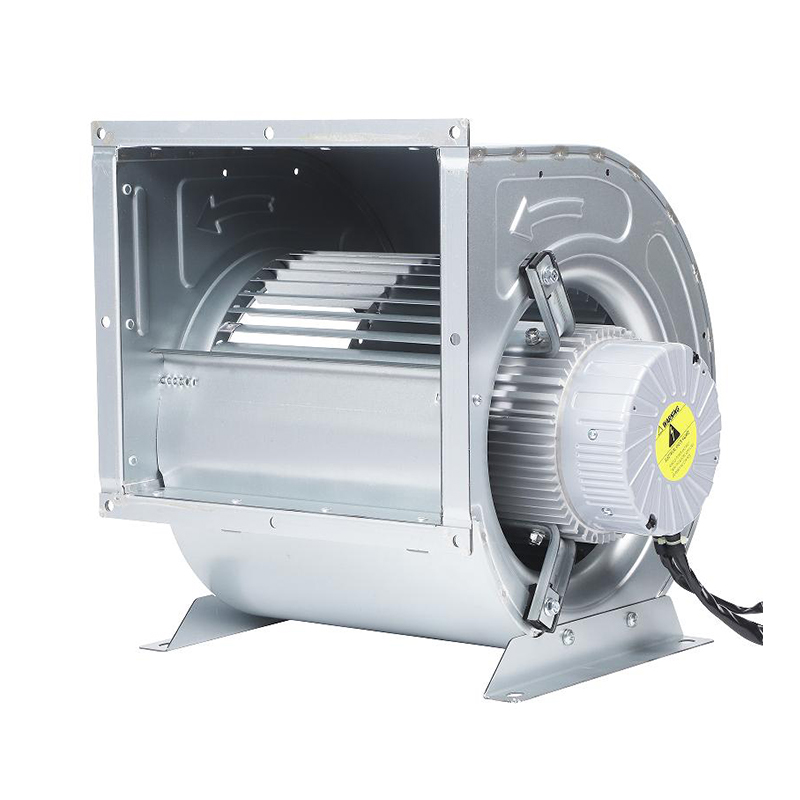
Key components
- Impeller: forward-curved or backward-curved blades that transfer energy to the air.
- Volute housing: the scroll-shaped casing that collects discharged air and converts velocity into static pressure.
- EC motor: a permanent-magnet rotor, stator windings, and an integrated inverter stage.
- Control connection: a 0-10 V DC, PWM, or potentiometer input that sets the target speed.
A conventional AC centrifugal blower is tied to the mains frequency, so a two-pole induction motor runs at roughly 2,800-2,900 rpm regardless of load. An EC 송풍기, by contrast, can be commanded across a wide speed range while maintaining near-constant motor efficiency. 기술에 대한 더 폭넓은 소개를 보려면 설명을 읽어보세요. EC 원심 팬이란? 데이터시트를 비교하기 전에
EC 원심 송풍기 작동 방식
The airflow path is the same as any centrifugal machine. Air enters the impeller eye in the axial direction, the blades accelerate it radially, and the volute collects the high-velocity air, slowing it down to convert kinetic energy into static pressure. 이 정압은 덕트, 코일 및 필터를 통해 공기를 밀어냅니다.
EC 모터는 회전이 생성되는 방식을 변경합니다. The integrated controller first rectifies the incoming AC supply to DC, then energises the stator windings in sequence so the permanent-magnet rotor follows a rotating magnetic field. Rotor position is sensed by Hall sensors or by back-EMF detection, which lets the controller maintain torque at any speed without mechanical brushes.
Speed control is therefore a signal, not a mechanical adjustment. A building management system can send 0-10 V DC, or the fan can be driven by PWM. As an example, the SYZ-77 0-10V 속도 제어 EC 원심 팬 accepts a 0-10 V input, making it simple to ramp airflow according to temperature or CO2 demand.
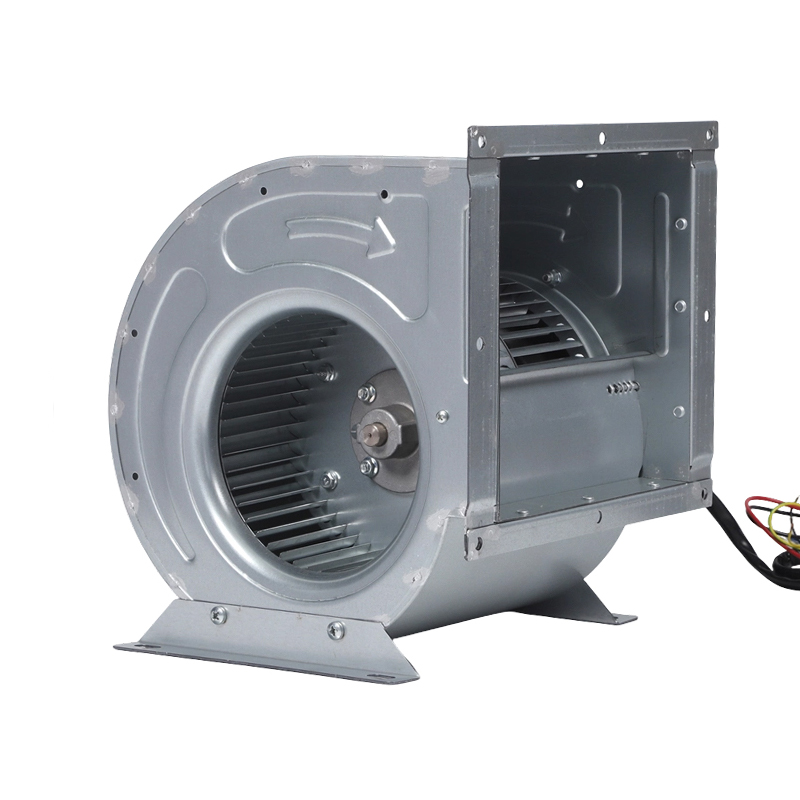 Syz 7-7 0-10v 속도 제어 Ec 원심 팬 공급 업체, 맞춤형 공장 - Yuyao Yuyao Jiale 환기 설비 유한 회사는 중국 OEM SYZ 7-7 0-10V 속도 제어 EC 원심 팬 공급 업체 및 공장입니다. 제품보기 →
 에너지 효율성 및 기타 이점
실제 작동 조건에서 에너지 절약
최고 속도에서는 EC 모터와 우수한 AC 유도 모터가 멀지 않습니다. 부분 부하에서는 차이가 나타납니다. Fan affinity laws state that power changes with the cube of speed: a blower running at 80% speed draws only about half the power of one running at full speed. EC 송풍기는 모터 자체가 임펠러의 속도를 늦추기 때문에 이 법칙을 따릅니다. 출구 댐퍼나 입구 베인이 있는 AC 송풍기는 그렇지 않습니다. the motor keeps drawing high current while the damper wastes the pressure. 이것이 바로 EC 원심 송풍기가 가변 부하 장비에서 일반적으로 30-50%의 에너지를 절약하는 이유입니다.
Quieter operation
임펠러는 부분 부하에서 더 느리게 작동하기 때문에 공기 흐름 소음은 속도와 함께 감소합니다. Electronic commutation also removes the slip and magnetic hum that are typical of induction motors running at reduced voltage.
Compact and controllable
No external frequency inverter, no V-belt, and no separate motor starter are required. The EC blower is a self-contained package that fits inside fan-coil units, air handling units, and compact fresh-air machines.
| 품목 | AC Centrifugal Blower | EC Centrifugal Blower |
|---|---|---|
| Speed control | Fixed or multi-tap | Continuous 0-10 V / PWM |
| Partial-load power | Remains high | 팬 법칙에 따라 삭제 |
| 외장 드라이브 | Not required | Not required |
| Building management link | Usually no | 0-10 V, PWM, Modbus |
| 유지보수 | 브러쉬는 없지만 와인딩 에이징 | 브러시가 없고 마모 부품이 적습니다. |
| 선불 비용 | 낮은 | 높음, 저축으로 상환 |
더 긴 서비스 수명
브러시가 없고 더 나은 열 관리 기능을 갖춘 EC 모터는 소형 모터의 가장 일반적인 두 가지 고장 지점을 제거합니다. 베어링 품질은 일반적으로 송풍기의 사용 수명을 결정하며 이는 제조업체의 베어링 선택 및 조립 제어에 따라 결정됩니다.
EC 원심 송풍기를 선택하는 방법
먼저 근무점을 정의하세요.
모든 송풍기에는 기류-정압 곡선이 있습니다. You need one that delivers the required airflow at the required static pressure, with a margin for dirty filters and duct tolerances. If the duty point sits near the right edge of the curve, a small change in resistance can stall the blower or drop airflow sharply.
앞으로 휘어지는가, 아니면 뒤로 휘어지는가?
전방 곡선형 임펠러는 주어진 직경에 대해 더 많은 공기 흐름을 생성하고 컴팩트한 상태를 유지하므로 팬 코일 장치에서 일반적입니다. Backward-curved blades handle higher static pressure and keep efficiency stable at partial load. 아래 표에는 차이점이 요약되어 있습니다.
| 특징 | Forward-Curved Impeller | Backward-Curved Impeller |
|---|---|---|
| 동일한 직경의 공기 흐름 | 더 높음 | 낮은 |
| 정압 기능 | 낮음 ~ 중간 | Medium to high |
| 부분 부하 효율 | 보통 | 더 나은 |
| Typical duty | 팬 코일, 소형 덕트, AHU | 고저항 덕트 및 필터 |
For high-volume duties at moderate static pressure, a large radial wheel such as the SYZ-1010 large-airflow radial EC centrifugal blower gives a practical balance of airflow and motor size. For compact equipment, small forward-curved wheels keep the package short.
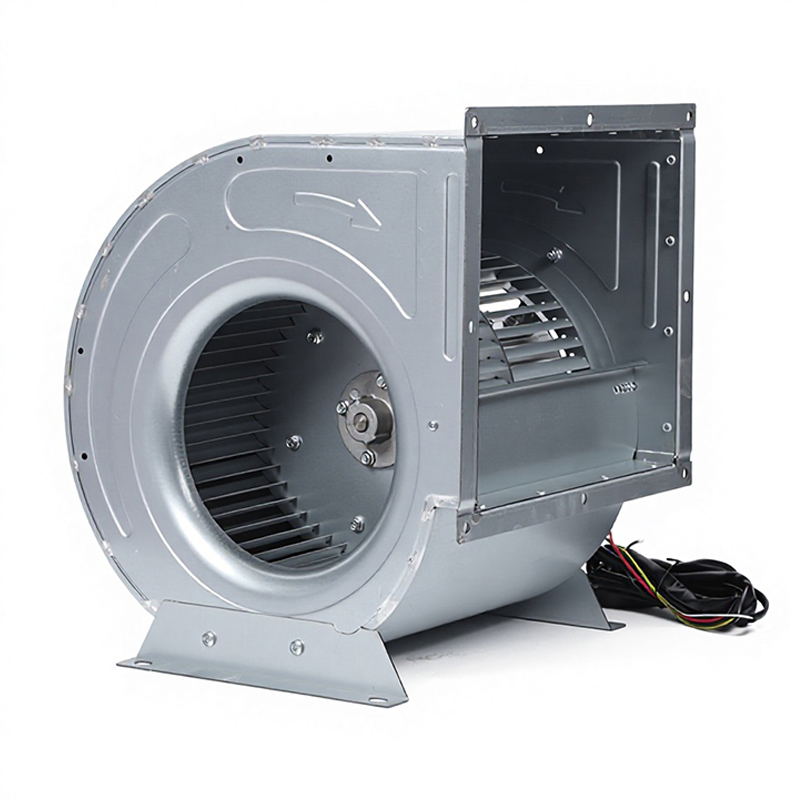 High Speed Blower Fan Supplier, OEM High Speed Blower Fan Company Yuyao Jiale Ventilation is China OEM high speed blower fan supplier and high speed blower fan company, we specialize in custom large airf... 제품보기 →
 제어 인터페이스를 일찍 선택하십시오
0-10V는 HVAC에서 가장 일반적인 입력입니다. PWM은 마이크로컨트롤러 기반 제품에 적합합니다. 네트워크 구축에는 Modbus 또는 기타 직렬 링크가 필요할 수 있습니다. Confirm that the manufacturer offers the interface your control board or BMS expects.
공급업체의 생산 능력을 확인하세요.
EC blowers combine mechanical and electronic parts, so verify that the manufacturer has a documented test process for airflow, vibration, and electrical safety. This matters more than the brochure efficiency figure.
EC 원심 송풍기의 일반적인 응용 분야
The most visible application is HVAC air handling, where units vary airflow to match heating and cooling demand, so the EC blower pays for itself quickly. In fresh air ventilation, 0-10 V control keeps CO2 levels stable. 공기청정기 및 클린룸 장비에서는 야간의 저속 작동과 작은 설치 공간이 결정 요인입니다.
- HVAC & air handling 35%
- 신선한 공기 환기 25%
- 공기 정화 20%
- 냉동 및 히트펌프 12%
- 통신 및 데이터 센터 8%
From refrigeration cabinets to telecom outdoor enclosures, the pattern is the same: an application with varying airflow demand benefits immediately. HVAC 공기조화기에서는 SYZ-99 variable-speed EC centrifugal fan for HVAC equipment is a straightforward fit because its control inputs are designed for building automation. 다른 크기와 압력 등급을 보려면 다음을 찾아보세요. 전체 EC 원심 팬 제품군 그리고 성능 곡선을 비교해보세요.
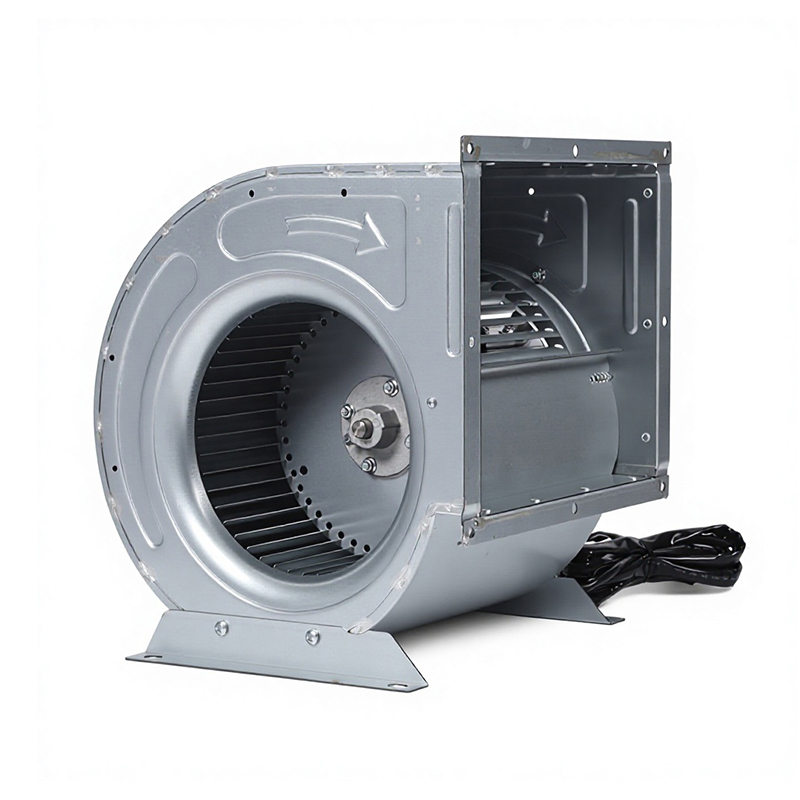 Custom HVAC Variable Speeds EC Centrifugal Fans Supplier, OEM Company Yuyao Jiale Ventilation is China OEM HVAC variable speeds EC centrifugal fans supplier and company, we specialize in custom variable spee... 제품보기 →
 자주 묻는 질문
EC 원심 송풍기에서 "EC"는 무엇을 의미합니까?
EC는 전자적으로 정류되는 것을 의미합니다. It describes a brushless DC motor that switches its stator windings electronically instead of using mechanical brushes, which reduces wear and improves efficiency across the speed range.
Do EC centrifugal blowers need a separate frequency inverter?
아니요. 컨트롤러는 모터에 통합되어 있습니다. You supply standard AC mains, for example 230 V / 50 Hz, and an optional 0-10 V or PWM speed signal.
How much energy can an EC blower save compared with an AC blower?
In a variable-load application, a typical saving is 30-50% depending on the operating profile. At 40% airflow, an EC blower can draw roughly half the power of a damper-controlled AC blower.
EC 원심 송풍기는 조용합니까?
Generally yes, especially at reduced speed, because both blade speed and motor hum decrease. Final noise still depends on the volute design and the surrounding system.
어떤 제어 신호가 지원됩니까?
The most common are 0-10 V DC and PWM, with potentiometer control on some models. Selected series also accept Modbus RTU for building management integration.
The EC centrifugal blower has moved from a niche premium option to the default answer for equipment makers that need efficiency, controllability, and compactness in one part. 시스템에 실제로 필요한 공기 흐름과 정압부터 시작하여 임펠러 유형을 비교하고 제어 인터페이스를 확인하십시오. For variable-load HVAC, fresh air, and purification equipment, the small price premium of EC technology usually pays back within the first two to three years of continuous service.
 ENG
ENG
